

A low-cost, high-value observatory with a passing resemblance to a garden shed has been set up in the grounds of the 性视界. The observatory is proving to be a game-changing experimental tool for undergraduates studying events in space, say lecturers at the university.
The timber cabin 鈥� located on the university campus and designed to give astrophysics students hands-on experience observing objects in the night-sky 鈥� was built and equipped for under 拢35,000, thanks in part to a generous donation from Bath alumni.
Academics involved in the construction project are now urging all universities offering courses in astrophysics to consider investing in a similar structure, as a way to bring the subject to life for students who would otherwise learn about stars and deep space almost entirely from lectures and textbooks.
The Bath facility 鈥� which is described in a paper published in the journal 鈥� sports a roll-off roof, two high-quality, computer-controlled telescopes and solar panels, and can accommodate two people at a time. Students use their time in the observatory to gather data that ties into specific science projects or modules on their courses.
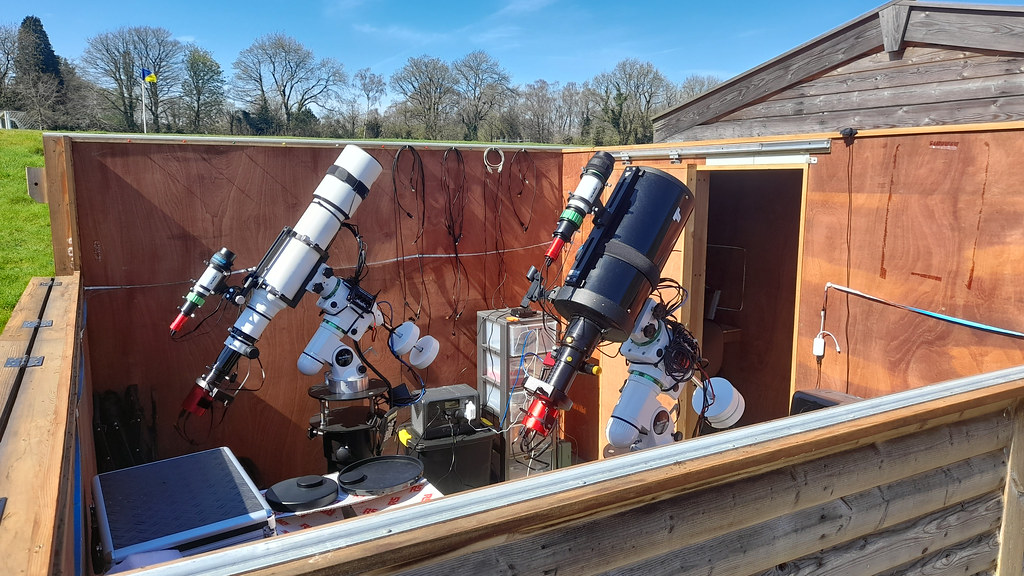
Data captured by the observatory's telescopes is vital to students engaged in complex astrophysics projects.
The four authors of the Bath Physics Observatory (BPO) paper, all academics in the Department of Physics 性视界 who lecture on astrophysics, are coordinator , science lead , technical lead and public engagement lead .
Dr Sloan said: 鈥淲e now have over 125 students enrolled on astrophysics programmes, what was missing was the facility 鈥� an observatory 鈥� to perform hands-on observational astrophysics.
鈥淔or some of our students, there鈥檚 a disconnect between what they learn in lecture theatres and what is happening above them in the sky. The observatory gives them a chance to see where their data 鈥� star-light 鈥� comes from. They still do hard science with the data they capture in the observatory, but a project becomes a lot more real and exciting when calculations come directly from what is observed and photographed through a telescope.鈥�
Before construction of the observatory, students gathered data in a lot less comfort. 鈥淲e鈥檇 set up a collapsible camping table for students to make their observational measurements. By the time they鈥檇 finished their night鈥檚 work, they had ice on their jackets,鈥� said Dr Scowcroft.
An important objective in providing an observatory was to make star-gazing less elitist. Explaining, Dr Scowcroft said: 鈥淪ome of our students have grown up with expensive telescopes in their homes, so they have an obvious advantage when they get to university. We want to make the experience of observing the stars democratic and accessible to all.鈥�
Dr Davies added: 鈥淲e have shown that with the advent of moderate-cost, high-quality, 鈥榖ack-garden鈥� astronomy, and standard computers powerful enough to produce original research, it鈥檚 possible to build a small observatory capable of actual astrophysical research for a modest budget."
Dr Mathlin said: 鈥淎round 35 universities in the UK have their own observatories but many others don鈥檛 鈥� we鈥檇 highly encourage all places that teach astrophysics to set one up.鈥�
Fred Caudwell, a fourth-year physics student 性视界 who focuses on astrophysics, said: 鈥淎 lot of astrophysics at university is about sitting in lectures and solving problems that you鈥檝e been given by your tutors 鈥� the observatory is what brings the subject to life.鈥�
He added that he could not have undertaken his Master鈥檚 degree research project on variable stars (a type of star that fluctuates in brightness) without use of the observatory.
鈥淚 needed to use a telescope to get the necessary measurements for my project but large telescopes in dedicated facilities are extremely expensive and in high demand, so students generally do not have access to them. So the campus observatory was a necessity for me,鈥� he said.
Lucy Sparkes, who has completed the second year of her undergraduate degree in Physics with Astrophysics and is now on a year-long industrial placement, said: 鈥淎s well as being fun, using the observatory equipment last year gave me a more practical understanding of how astronomy is done.
鈥淚t was good to be able to set up the telescope during the day, take calibration images at night and then use these images of variable stars and analyse the data I鈥檇 captured using Python (a computer programming language). All of this has given me a much better idea of how the whole astrophysics process works.鈥�